Bringing a newborn baby home makes a beautiful moment, but it also brings many new responsibilities. New parents often feel confused about feeding, sleep, hygiene, and comfort.
This simple guide explains all important newborn care steps in an easy way and helps you care for your baby at home with confidence.
Where to Get Help After Bringing Your Newborn Baby Home (Support for New Parents)
After the baby comes, parents often feel tired and submerged. They should not try to manage everything alone.
They should ask family members to help with cooking, cleaning, and baby care. This support gives them time to rest and regain.
They can also contact a doctor, nurse, or midwife if they feel doubtful about baby care. Many hospitals also provide home visits or follow-up support for new mothers.
They should remember that support is not a deficiency, it is an important part of good parenting.

How to Care for Your Newborn’s Umbilical Cord and Post-Circumcision Healing Safely
Your baby’s umbilical cord needs gentle care. You should keep it clean and dry at all times. Do not apply powders, oils, or home treatments unless a doctor suggests them.
The cord usually falls off naturally within 1–2 weeks.
If your baby has a foreskin removal, you should keep the area clean and follow the doctor’s guidelines carefully. You should change diapers gently to avoid frustration.
You should contact a doctor if you notice redness, swelling, bleeding, or a bad smell.
When and How to Give Your Newborn a Safe Tub Bath
You should not give a tub bath until the umbilical cord falls off. Until then, you should give a sponge bath using a soft cloth.
Step-by-step bath guide:
- You should use warm water (not hot or cold)
- You should choose a soft baby soap
- You should keep the room warm
- You should support your baby’s head and neck carefully
- You should clean your baby gently and quickly
You should keep bath time calm and safe so your baby feels comfortable.
How to Build a Strong Emotional Bond With Your Newborn Baby Naturally
Bonding helps your baby feel secure and loved. You build a strong bond through easy daily activities.
You should keep your baby close, make eye contact, and talk often. You also strengthen emotional connection through breastfeeding and skin-to-skin contact.
Even small actions like singing, smiling, and gentle touching help your baby trust you.
Think of connection like building strong family relations; hip, it grows with time and care.
Easy and Effective Ways to Soothe a Crying Newborn Baby
Babies cry to show their needs, like hunger, sleep, irritation, or a dirty diaper.
To quiet your baby, you should:
- Feed your baby if they feel hungry
- Check and change the diaper
- Hold and gently rock your baby
- Burp your baby after feeding
- Talk softly or sing to your baby
Every baby behaves differently. Over time, you will understand what works best to quiet your baby.
How to Change a Newborn Baby’s Diaper Correctly and Keep Them Clean
Diaper changing plays an important role in newborn care.
Simple steps:
- You should lay your baby on a secure surface
- You should remove the dirty diaper softly
- You should clean the area with wipes or warm water
- You should dry the skin properly
- You should apply diaper cream if needed
- You should put on a clean diaper
You should change diapers regularly to prevent skin irritations and discomfort.

Your Baby? (0–3 Months Guide)
Newborn babies need regular feeding for healthy growth.
You should feed your baby every 2 to 3 hours, which means about 8–12 times in 24 hours.
Regular feeding:
- Supports your baby’s growth
- Improves digestion
- Increases milk supply
Think of feeding like charging a battery—regular charging keeps your baby active and healthy.
Newborn Sleep Guide: What Parents Should Know About Baby Sleep Patterns
Newborn babies sleep a lot, usually 14 to 17 hours a day, but they do not sleep in long expanses. They wake up often for feeding and comfort.
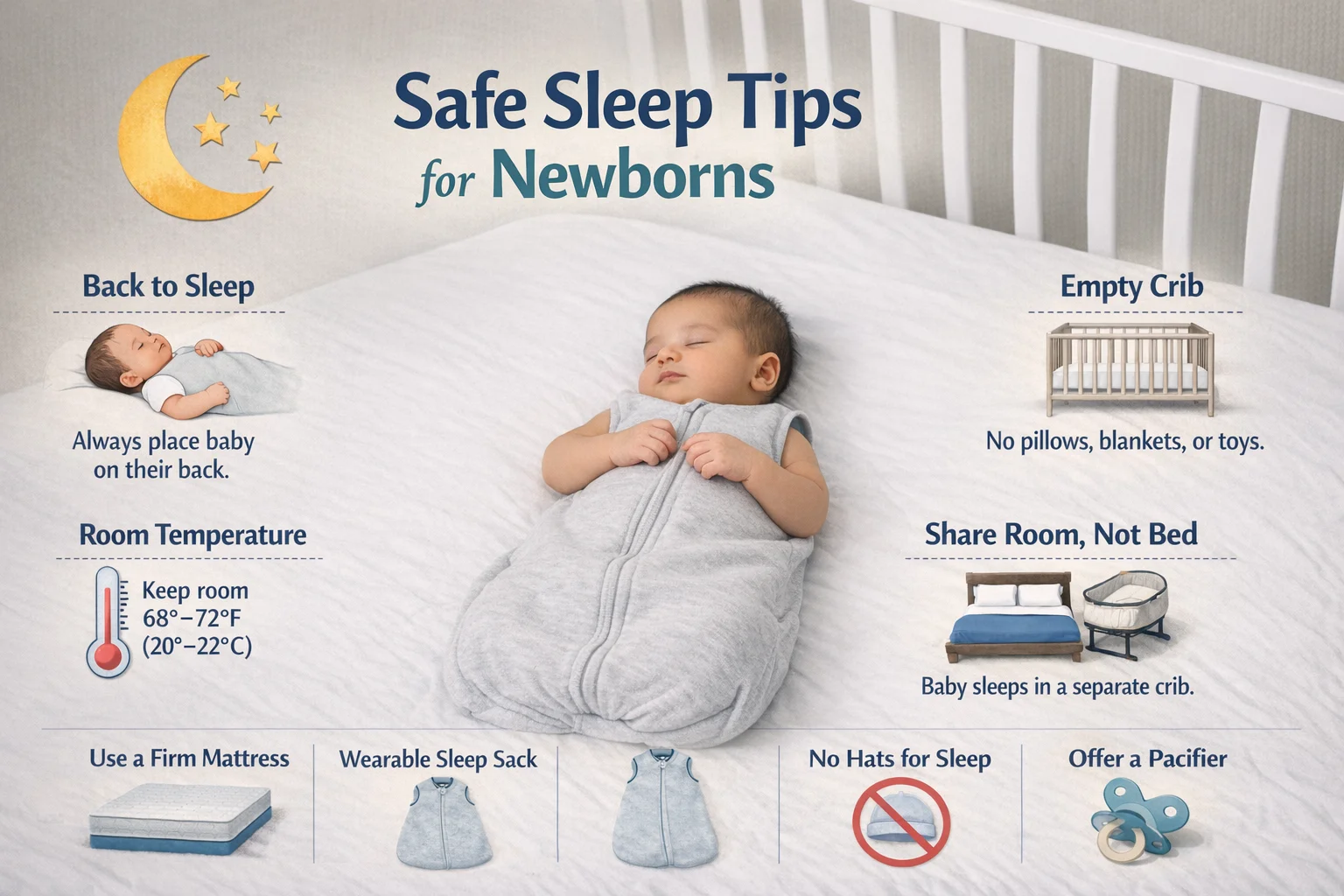
You should always follow safe sleep habits:
- You should place your baby on their back to sleep
- You should keep the bed free from pillows and heavy blankets
- You should use a clean and safe sleeping space
Good sleep helps your baby grow and develop correctly.
Conclusion
Taking care of a newborn at home becomes effortless when you follow simple procedures like proper feeding, safe sleeping, gentle bathing, and emotional bonding.
You should treat every baby differently because each baby has unique needs. You should stay patient and follow routines consistently.
Over time, you will understand your baby’s needs better, and you will feel more assured as a parent.
FAQs
You can take care of a newborn by following simple routines like proper feeding, safe sleeping, gentle bathing, diaper changing, and emotional bonding.
You should feed your newborn every 2 to 3 hours, which means about 8–12 times in 24 hours.
You should place your baby on their back, keep the bed free from pillows and heavy blankets, and use a clean sleeping space.
You should feed your baby if hungry, change the diaper, hold and rock gently, burp after feeding, or talk and sing softly.
You should keep the cord clean and dry and avoid applying oils or powders. It usually falls off within 1–2 weeks.