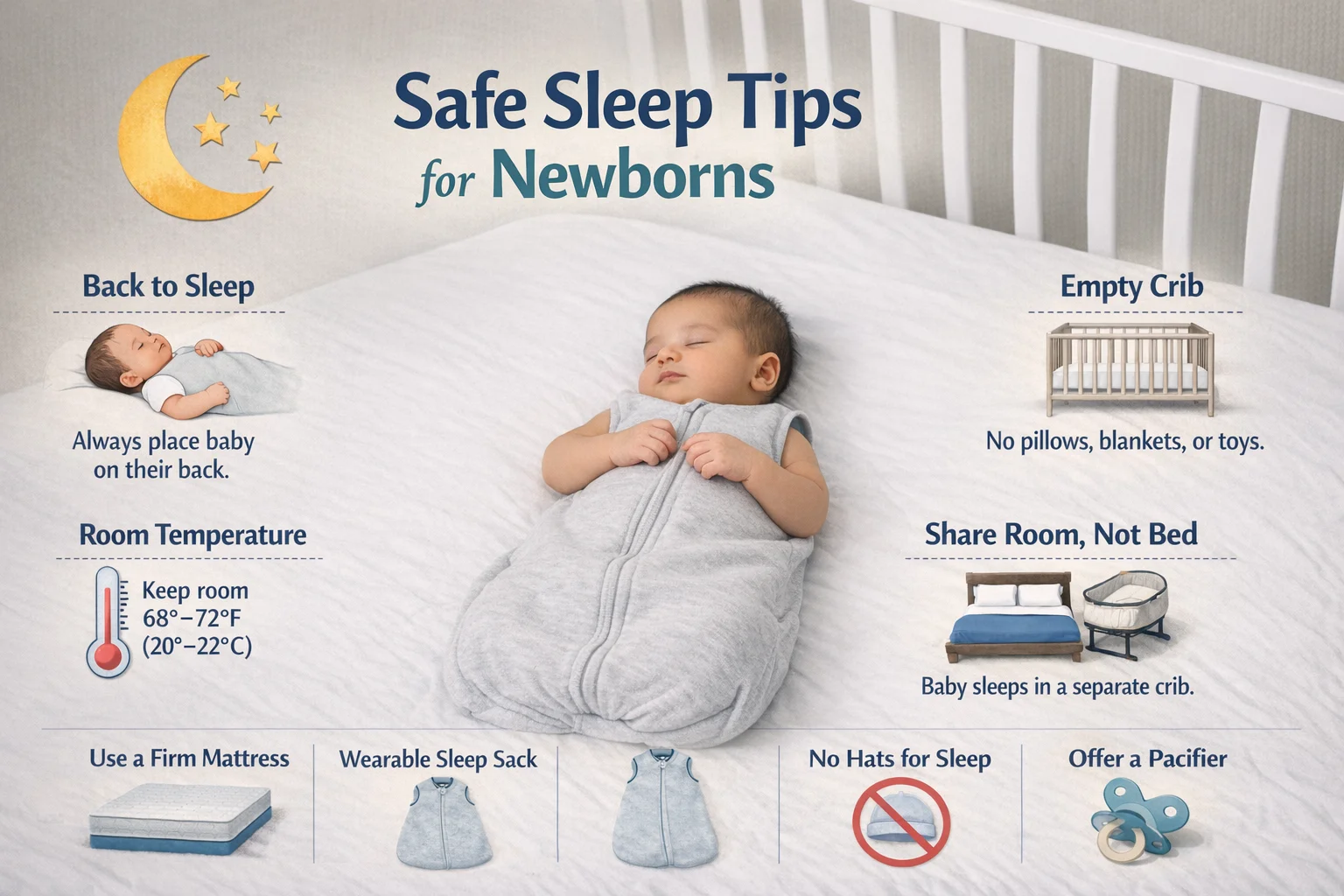
Follow the “ABC” rule for safe sleep: place your baby Alone, on their Back, and in a Crib. Use a stable, flat mattress and clear the area of all pillows, blankets, and toys. Use a comfortable swaddle to stop the startle reflex and keep the room between 20°C and 22°C to prevent overheating.
These simple steps create a safe environment so your baby can rest peacefully.
In this guide, we break down common sleep problems and offer simple solutions to help your whole family rest.
Common Newborn Sleep Problems and Solutions
Newborns (0–3 months) lack a set schedule because they haven’t yet developed an internal clock (circadian rhythm). Look out for these common hurdles:
| Problem | Why it Happens | Simple Solution |
| Day/Night Confusion | Your baby sleeps all day and stays awake all night. | Brighten and fill the home with noise during the day, then low the lights and keep silence at night |
| Startle Reflex | Sudden arm jerks wake your baby. | Swaddle your baby to secure their arms and keep them snug |
| Short Naps | Your baby wakes after only 20–30 minutes. | Cool the room and use white noise to block outside sounds. |
| Over-tiredness | An overtired baby struggles to settle and resists falling asleep | Watch for “sleep cues” like eye rubbing or yawning, then put them down early. |
Sleep Training
Sleep training helps your baby learn to fall asleep without you rolling, feeding, or holding them. Most experts recommend starting this process between 4 and 6 months, once the baby no longer requires feeding every 2 hours.
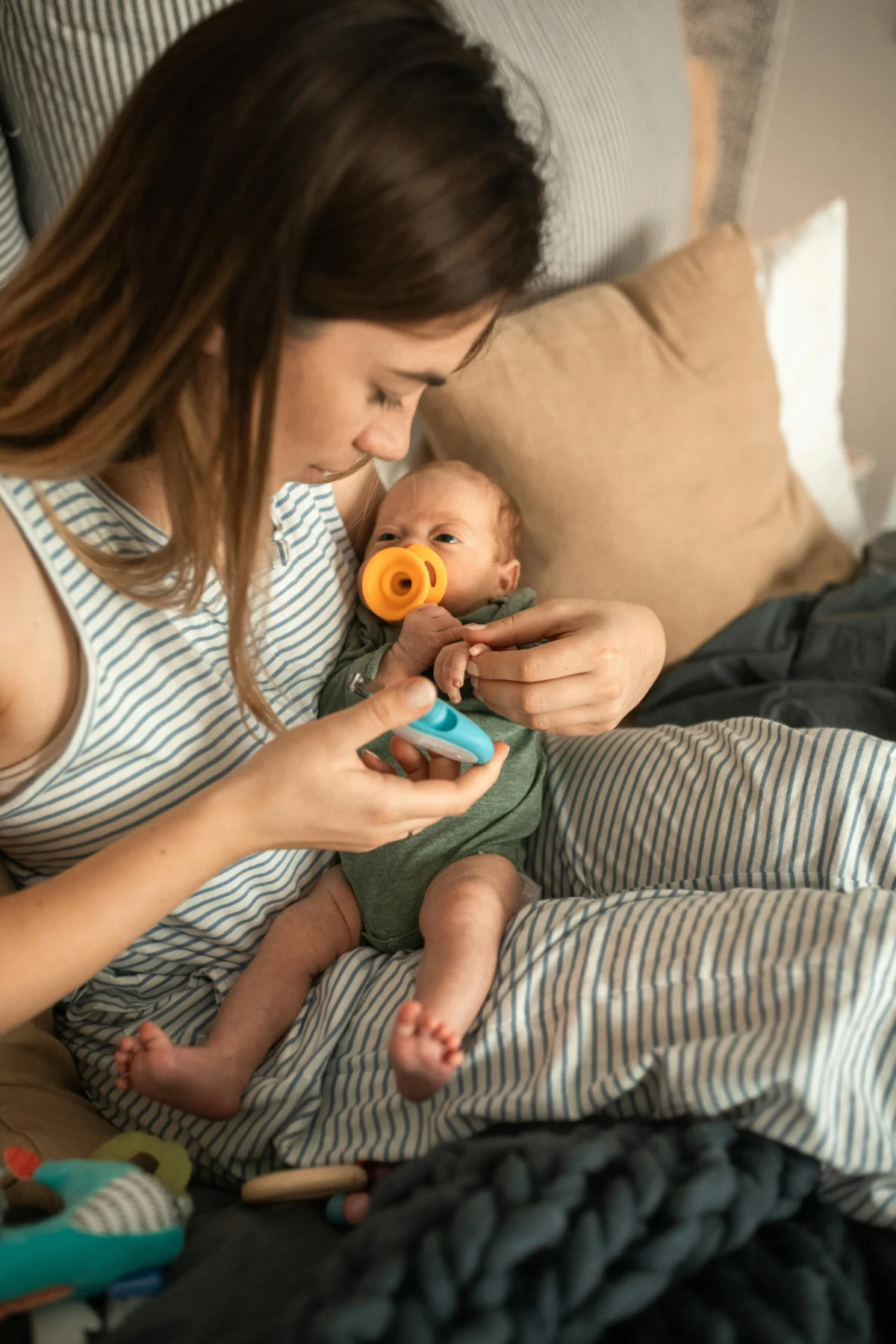
Popular Sleep Training Methods
The Chair Method: You sit in a chair next to the crib until your baby falls asleep. Each night, you move the chair further toward the door until you exit the room entirely.
Pick Up, Put Down You pick up your baby the moment they cry, but you place them back in the crib as soon as they calm down. You repeat this process until the baby settles into sleep independently.
Controlled Comforting You check on your baby at set intervals—such as every 5, 10, or 15 minutes—to offer brief comfort. During these visits, you provide comfort through your voice or a gentle pat, then leave the room again.
Steps to a Successful Sleep Routine
Consistency unlocks better sleep. Follow this simple 5-step routine every night:
Warm Bath A soothing bath signals the end of the day and relaxes your baby’s muscles.
Massage & PJs Gentle rubbing with lotion helps your baby relax while you dress them in comfortable pajamas.
Quietly feed your baby in a low-lit room and reduce talking to keep the peaceful environment.
The “Drowsy but Awake” This Rule: This step matters most. Place your baby in the crib when they feel sleepy, but still keep their eyes slightly open. This practice teaches them how to complete the “falling asleep” process independently.
Safe Sleep Checklist
Before you start sleep training, ensure your baby’s environment follows safety guidelines to prevent SIDS (Sudden Infant Death Syndrome):
- Back is Best: Always place your baby on their back to sleep.
- Clear the Crib: Clear the crib of all pillows, blankets, toys, and bumpers. Use only a firm mattress and a fitted sheet.
- Room Sharing: Keep your baby’s crib in your room for the first 6 months, but never share the same bed.
- Check the Temp: Keep the room between 20°C and 22°C (68°F–72°F).

When to Call a Doctor
While most sleep issues remain normal, contact your pediatrician if:
- Your baby experiences pain or extreme gas.
- The baby fails to gain weight.
- The baby struggles to breathe or exhibits heavy snoring.
Conclusion
Help your baby sleep better with consistency, safety, and patience. Follow safe sleep practices, understand common challenges, and use gentle methods to build a calm routine. Stay flexible, watch your baby’s cues, and adjust as needed—better sleep will come with time.
FAQs
Most experts recommend starting sleep training between 4 and 6 months, when babies can go longer without feeding and begin developing a sleep routine.
Yes, white noise is safe when used at a low, consistent volume. It helps block sudden sounds and creates a calming sleep environment for your baby.
First, check basic needs like hunger, diaper, or discomfort. If everything is fine, use gentle sleep training methods like controlled comforting or pick up, put down to help your baby learn self-soothing.